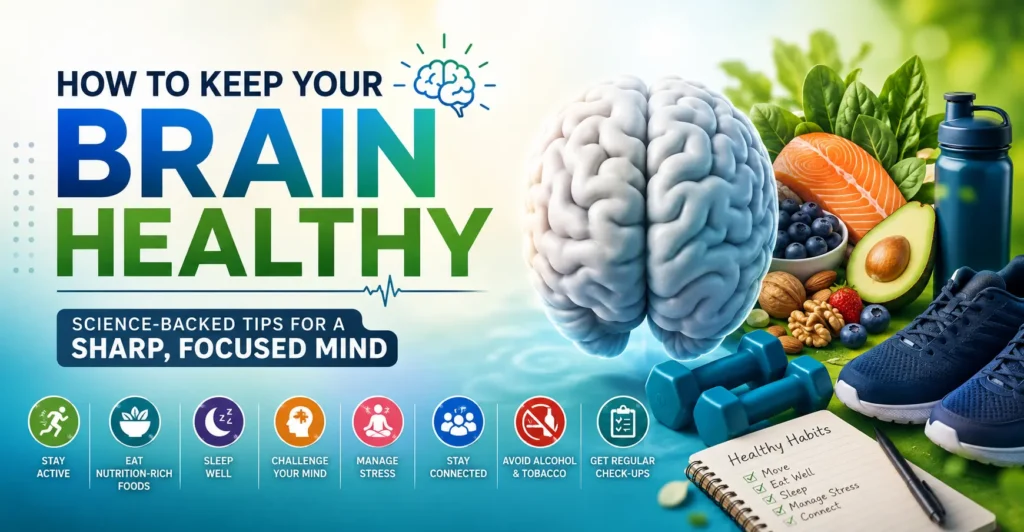
How to keep your brain healthy comes down to eight daily habits backed by medical research: staying physically active, eating a brain-friendly diet, sleeping well, challenging your mind, managing stress, staying socially connected, cutting back on alcohol and tobacco, and getting regular health check-ups. Together, these habits protect memory, focus, and mood, and research shows they can meaningfully lower the risk of cognitive decline as you age.
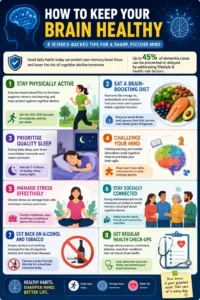
Your brain is arguably the hardest-working organ in your body. It runs on roughly 20% of your daily energy intake despite making up only about 2% of your body weight, and it never really switches off — even while you sleep, it is busy filing away memories and clearing out waste. Yet most of us spend far more time thinking about our heart, our weight, or our skin than we do about our brain health. That is a mistake, because a large and growing body of research shows that brain ageing is not entirely out of our hands. According to the 2024 report from the Lancet Commission on Dementia Prevention, Intervention and Care, up to 45% of dementia cases worldwide could potentially be prevented or delayed by addressing 14 modifiable lifestyle and health risk factors across a person’s life course, including physical inactivity, poor diet, hearing loss, high cholesterol, smoking, and social isolation.
That is genuinely good news. It means that many of the everyday choices you make — what you eat, how much you move, how well you sleep, and who you spend time with — have a direct, measurable impact on how sharp, focused, and resilient your mind stays over the decades. Below is a practical, evidence-based guide to keeping your brain healthy at every age.
Why Brain Health Deserves Your Attention
Good brain health is not just about avoiding dementia in old age. A well-functioning brain supports concentration at work, quick decision-making, emotional balance, and the ability to learn new skills throughout life. Poor brain health, on the other hand, can show up much earlier than people expect — as brain fog, forgetfulness, low mood, or difficulty concentrating — often long before any serious diagnosis is made. Building brain-healthy habits now is essentially an investment that pays out for the rest of your life.
1. Stay Physically Active
Exercise is one of the most powerful, well-evidenced tools for protecting your brain. Physical activity increases blood flow and oxygen delivery to the brain, encourages the growth of new blood vessels, and supports the hippocampus — the region responsible for memory and learning.
The World Health Organization recommends that adults get at least 150 to 300 minutes of moderate-intensity aerobic activity per week, or 75–150 minutes of vigorous activity, for substantial health benefits, including improved cognitive function. Despite this, the WHO estimates that around 31% of adults worldwide — roughly 1.8 billion people — do not meet these minimum activity levels, putting their long-term brain health at unnecessary risk.
You do not need a gym membership to benefit. Practical options include:
- A brisk 30-minute walk on most days of the week
- Swimming or cycling for cardiovascular benefits
- Yoga or tai chi, which combine gentle movement with breathing and focus
- Strength training twice a week to support overall metabolic and vascular health, both of which are linked to brain function
2. Follow a Brain-Boosting Diet
What you eat has a direct line to how your brain performs. Diets rich in omega-3 fatty acids, antioxidants, and essential vitamins are consistently associated with better cognitive outcomes and a slower rate of age-related decline, while diets high in processed food, refined sugar, and unhealthy fats are linked to poorer brain outcomes.
Foods worth building your plate around include:
- Leafy greens such as spinach and kale, rich in folate and vitamin K
- Fatty fish like salmon, mackerel, and sardines, a strong source of omega-3s
- Berries, which are high in antioxidants that help combat oxidative stress in brain cells
- Nuts and seeds, especially walnuts, for healthy fats and vitamin E
- Whole grains and legumes, which provide a steady release of glucose, the brain’s primary fuel
Certain vitamins deserve special mention for brain health, including B12, D, and E, along with folate — deficiencies in these have been linked to memory problems and mood changes. Try to limit ultra-processed foods, excess sugar, and artificial additives, and stay well hydrated, since even mild dehydration can affect concentration and short-term memory.
3. Prioritise Quality Sleep
Sleep is not downtime for the brain — it is active maintenance. During deep sleep, the brain consolidates new information into long-term memory and clears out metabolic waste products that build up during waking hours.
Health authorities, including the CDC and the National Sleep Foundation, recommend that adults get at least 7 to 9 hours of sleep per night. Yet in 2024, over 30% of adults in the United States reported sleeping less than 7 hours a night, a shortfall linked to poorer attention, weaker memory consolidation, and greater long-term risk of cognitive decline.
To protect your sleep quality:
- Keep a consistent bedtime and wake-up time, even on weekends
- Avoid screens for at least 30 minutes before bed
- Keep your bedroom cool, dark, and quiet
- Avoid caffeine and heavy meals late in the evening
4. Keep Your Mind Actively Engaged
Just as muscles need resistance to grow stronger, your brain needs regular mental challenge to build and maintain neural connections — a concept known as cognitive reserve. People with higher cognitive reserve tend to cope better with age-related brain changes and show symptoms of decline later than those with less mentally stimulating lifestyles.
Simple ways to build cognitive reserve include:
- Solving puzzles, crosswords, or strategy games
- Reading regularly and discussing what you have read
- Learning a new language or musical instrument
- Picking up a creative hobby such as painting, writing, or photography
- Taking an online course in a subject you know nothing about
5. Manage Stress Effectively
Occasional stress is a normal part of life, but chronic, unmanaged stress raises cortisol levels over time, which can shrink areas of the brain involved in memory and impair the formation of new neural connections. The Lancet Commission’s 2024 report specifically lists depression — often linked to prolonged, unresolved stress — as one of the 14 modifiable risk factors for dementia.
Practical stress-management tools include:
- Daily mindfulness or meditation practice, even just 10 minutes
- Deep-breathing exercises during stressful moments
- Regular physical activity, which also lowers cortisol
- Setting realistic boundaries at work and in personal life
- Speaking to a mental health professional if stress feels unmanageable
6. Nurture Social Connections
Loneliness and social isolation are now recognised as genuine, independent risk factors for cognitive decline — not just quality-of-life concerns. Social interaction stimulates multiple brain regions simultaneously, including those involved in language, emotional regulation, and memory, and the 2024 Lancet Commission report includes social isolation among its list of 14 modifiable dementia risk factors.
Ways to stay socially engaged include:
- Making time for regular calls or meet-ups with friends and family
- Joining a club, class, or community group built around a shared interest
- Volunteering, which combines social contact with a sense of purpose
- Staying connected with colleagues and neighbours, not just close family
7. Limit Alcohol, Tobacco, and Environmental Toxins
Excessive alcohol consumption and smoking are both listed among the modifiable risk factors identified by the Lancet Commission, and for good reason — both are directly toxic to brain cells and blood vessels over time. Heavy drinking is linked to shrinkage of brain tissue, while smoking damages blood vessels that supply the brain with oxygen, raising the risk of stroke and vascular dementia. Long-term exposure to air pollution has also been identified as an independent risk factor for cognitive decline, so where possible, reducing exposure to heavy traffic pollution and indoor toxins is worth considering too.
8. Go for Regular Health Check-Ups
Several everyday health conditions have an outsized effect on brain health if left unmanaged. High blood pressure, high cholesterol, diabetes, hearing loss, and untreated vision problems are all included in the Lancet Commission’s list of modifiable dementia risk factors — and all of them are things a routine health check-up can catch early.
Make it a habit to:
- Get your blood pressure and cholesterol checked at least annually
- Have your blood sugar levels monitored, particularly if you have a family history of diabetes
- Get your hearing and vision tested every couple of years, especially after 50
- Discuss any memory concerns honestly with your doctor rather than dismissing them
Frequently Asked Questions
What is the number one thing I can do for brain health?
There is no single “magic” habit — the strongest evidence points to a combination of regular physical activity, a nutritious diet, and 7–9 hours of quality sleep working together, rather than any one factor alone.
Can brain health actually improve with age, or does it only decline?
Yes, it can improve. The brain retains a degree of plasticity throughout life, meaning new habits, learning, and physical activity can strengthen neural connections at any age, not just prevent decline.
Which foods are best for brain health?
Fatty fish, leafy greens, berries, nuts, and whole grains are consistently linked to better cognitive outcomes, largely due to their omega-3, antioxidant, and vitamin content.
Can yoga really help brain health?
Yes. Yoga combines physical movement, controlled breathing, and mindfulness, all of which have been shown to lower stress hormones and support healthy blood flow to the brain.
How much sleep do I need for good brain health?
Most adults need 7–9 hours of good-quality sleep per night for optimal memory consolidation, focus, and emotional regulation, according to the CDC and the National Sleep Foundation.
Is memory loss always a sign of dementia?
No. Occasional forgetfulness can be linked to stress, poor sleep, or normal ageing. However, persistent or worsening memory problems that interfere with daily life should always be discussed with a doctor.
Final Thoughts
Keeping your brain healthy is not about one dramatic lifestyle overhaul — it is about stacking small, consistent habits: moving your body, eating well, sleeping properly, staying curious, managing stress, staying connected to people, avoiding harmful habits, and keeping up with routine health screenings. With nearly half of dementia risk now considered modifiable according to current research, the choices you make today genuinely matter for the mind you will have tomorrow. Start with just one or two changes from this list, build them into a routine, and let your brain health become a lifelong habit rather than a one-off resolution.
Article Written and Reviewed By – Dr Ganesh VL
Sources
- Livingston, G. et al., 2024 report of the Lancet Commission on dementia prevention, intervention, and care, The Lancet, 2024.
- World Health Organization, Physical Activity Fact Sheet, who.int, 2024.
- World Health Organization, Guidelines on Physical Activity and Sedentary Behaviour, 2020.
- Centers for Disease Control and Prevention (CDC), Short Sleep Duration and Sleep Difficulties Among Adults: United States, 2024.
- National Sleep Foundation, Sleep Duration Recommendations, sleepfoundation.org.